
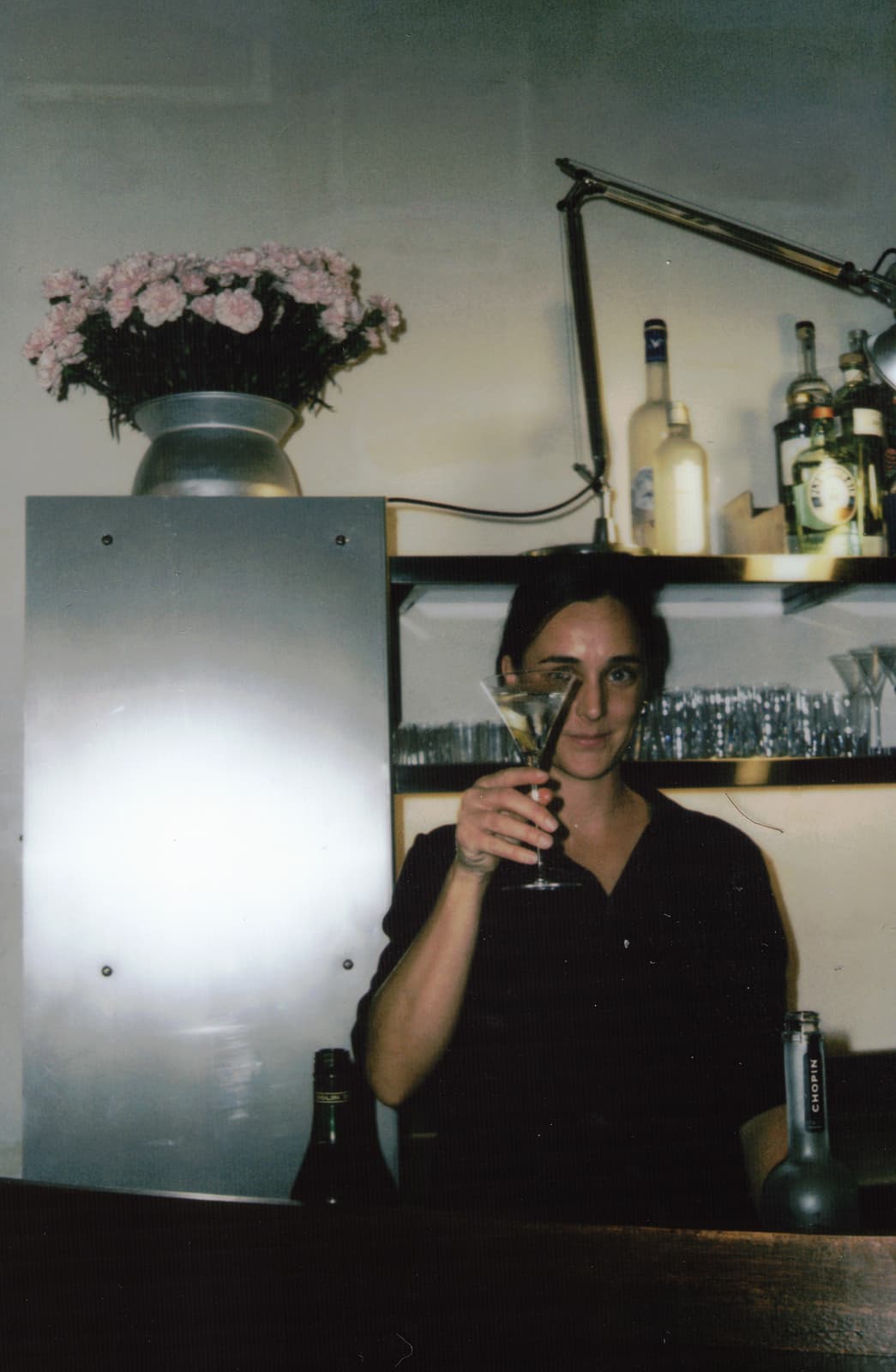
Audrey Shaw is the Melbourne chef behind Fitzroy’s Carnation Canteen, where a refined, assured approach to cooking and hospitality has made a distinct mark on the local dining landscape. Now, with Bar Carnation, she takes on the storied Gerald’s site, shaping it into a place quietly her own. In a restaurant culture still largely defined by male chefs, her presence feels both significant and assured. As this next chapter unfolds, we asked her to share a few civilised notes on a drink that rewards care and restraint: the perfect martini.
Where does the martini sit in your life — ritual, punctuation, indulgence, or something else?
A martini for me is a constant. The first question we ask every guest at Carnation Canteen and Bar Carnation is: would you like a martini or a glass of Champagne? Napoleon said that in victory, you deserve Champagne; in defeat, you need it, and I agree. Both can be celebratory, a martini however can really steady you.
When did you first begin taking the martini seriously?
At Dukes Bar in London. At the bottom of a hotel in Mayfair, they mix the martinis tableside in a dimly lit lounge. It was the first time I saw a vermouth rinse — poured into the glass, swilled, then discarded. The excess, the opulence, the theatre of it, I was in. The drink was bone dry and completely unforgettable.
Walk us through your idea of the perfect martini. Ratios, temperature, preparation, atmosphere.
I like my martini dry and very very cold. Ideally the booze and the glass are taken from the freezer. It’s also good to remember it’s a three sip drink, not something to savour.
Gin or vodka — and why.
Vodka — if it’s good. With bad vodka, don’t bother. But with excellent vodka, it’s sublime: clean and a little sharp, the perfect buzz.
Olive or twist.
Vodka with a twist. Gin with an olive.
What is the one detail people most often get wrong?
Not drinking it fast enough!

How much does glassware matter?
It’s essential! You cannot drink a martini from any old glass. For the bar, we imported our martini glasses from Hong Kong — tall, slender, almost dangerously light. They have a kind of ’80s power-glam confidence. It’s a chic drink, and the stemware is part of the ceremony.
Is there a moment in the day when a martini feels most correct?
Like black tie, a martini belongs after 6pm.
Does the setting change how you make one?
Ideally, someone makes it for you. Like a bowl of pasta, it’s almost always better when cooked by someone else. And if I’m honest, martinis are rarely at their best at home. At home, I’ll open Champagne. A martini belongs in a dimly lit room — held at the right temperature, in the right glass, with a sense of occasion.
For someone making a martini at home, what is the simplest way to get it right?
Keep your booze in the freezer! The cold makes up for a lot.
What defines a well-made drink to you, beyond the recipe?
Ingredients first. Care second. Source the best you can and treat them properly. Precision is a form of respect.
Do you think there is etiquette around ordering or serving a martini?
Order it how you like! There’s no virtue in suffering through a drink for appearances.
What does restraint look like when it comes to taste?
Restraint is knowing when to stop. It’s confidence — being true to your own palate and pulling back before excess dulls the point.
With Bar Carnation now open, what did you hope the space would offer Melbourne?
I wanted the bar to feel like a constant — which is why we’re open seven days a week. It should become habitual, almost compulsive. A place that quietly anchors your week.
What makes someone return to a place again and again?
Mood. I’m always chasing atmosphere — the staff, the lighting, the music, the guests. It’s about how those pieces align. People come back for how it made them feel.

![]() What are you reading at the moment?
What are you reading at the moment?
I am always reading multiple things simultaneously. I just finished Ben Lerner’s new Transcriptions, and it really stopped me. I got the King cookbook and have loved reading and cooking through that over summer. And working my way through Portraits John Berger on Artists that my friend Coco suggested I read.
Are there artists, writers, architects or creatives outside of food who shape how you think about your work?
So many. I love Cy Twombly’s paintings — his Carnations series was partly the namesake for our restaurant. I love the music of Bill Evans, especially the later stuff which we play often at the canteen. And I’m drawn to the intimate, almost confessional writing of Natalia Ginzburg, Rachel Cusk, Eve Babitz and Joan Didion. There’s restraint in their work, but also feeling — that balance means a lot to me.
When you cook for yourself at home, what do you make?
To be completely honest, I cooked dinner at home three times last year. Owning a restaurant means I’m usually eating standing up over a sink or in the middle of a meeting. If I get an evening off, I want to be out in the world. I talk about lying in a dark room in silence — but given the opportunity, I can’t help myself. I go out to dinner.
